
Invoicing software for consulting firms
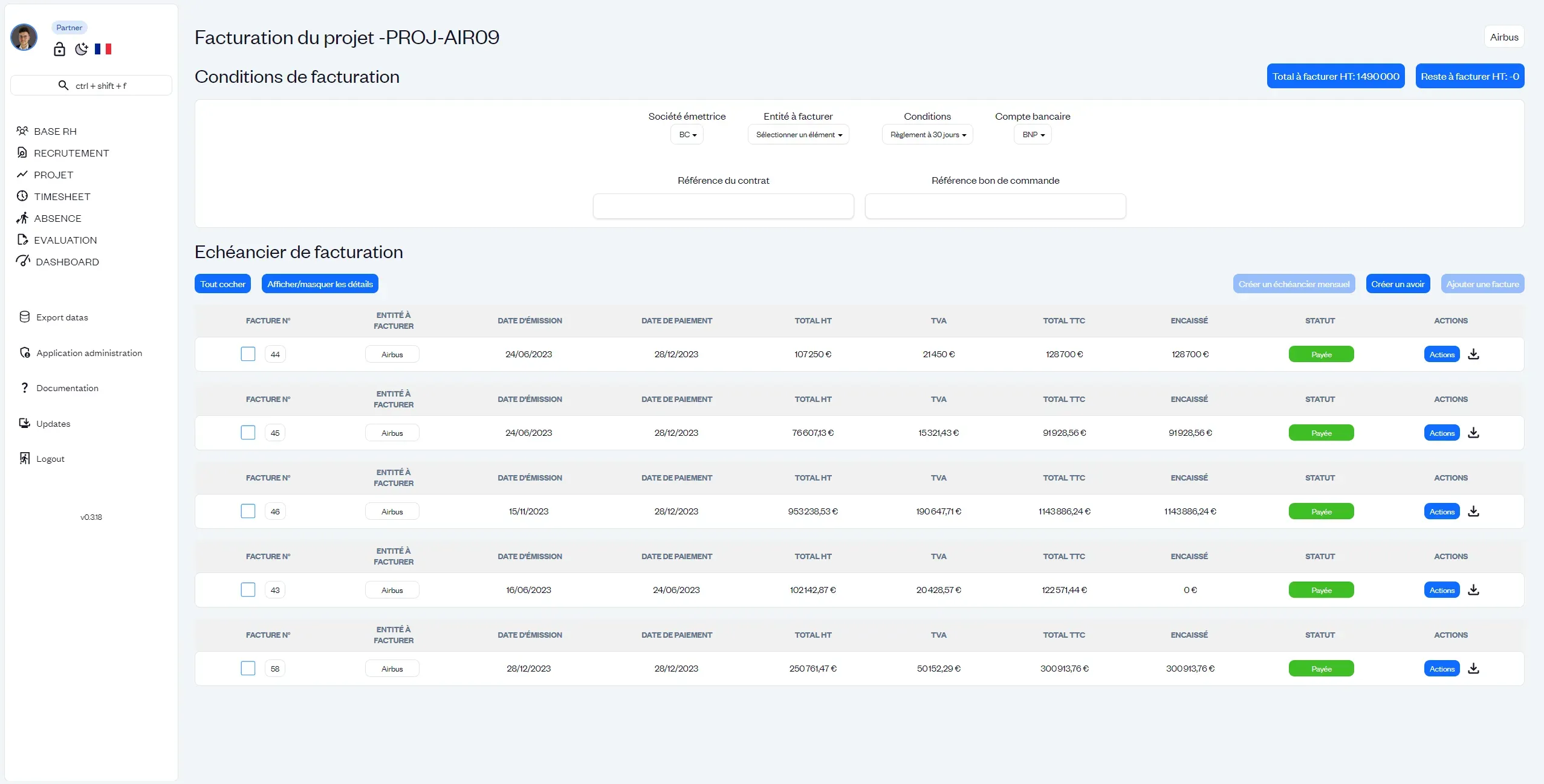
In a consulting firm, the invoice does not start in accounting software. It starts from sold days, booked days, and billable expenses. BestConsultant builds the billing schedule from the engagement — fixed fee, budget, or actuals — then tracks the draft through to payment, with no file in between.
How do you invoice on actuals without reconciling timesheets in Excel?
When consultants submit their days, those days feed what remains to bill. Rebillable expenses follow. You tick the lines, create the invoice, and track issue, send, and payment. The spreadsheet no longer has to reconcile three exports at month-end.
It is the same chain as in the consultant journey: actual days become an invoice, then cash collected.
Budget or actuals: how does the schedule follow the engagement?
You bill on a fixed fee, planned days, or actual days. The list of projects to invoice shows, for each engagement, the client, dates, amount already billed, and progress. Closed projects move to the archive. Text templates, ledger accounts, and payment terms are set once — not on every invoice.
What this is not
- Accounting software: no general ledger, no statutory accounts.
- A finance ERP built for industry or retail.
- A shared spreadsheet where a partner pastes timesheets before issuing.
From staffing to cash collected
Engagement budgets and planning live in projects. Actual days live in timesheets. The invoice reuses both. Firm administration, engagement managers, and partners see the same schedule, with different access rights.
Who uses it in the firm?
| Role | What they track |
|---|---|
| Partner / engagement director | Remaining to bill, collections, budget vs actuals |
| Project manager | Engagement schedule, recovered expenses |
| Administration | Templates, payment terms, statuses (draft → paid) |
HR database for consulting firms
The firm’s centralized HR base — directory, skills, engagements and onboarding, built to feed staffing.
Expense management software for consulting firms
AI reads the receipts, every expense lands on the engagement, approval takes one click — rebillable costs go to the invoice, the rest to project margin.